
Conservation of William Morris ceiling wallpaper
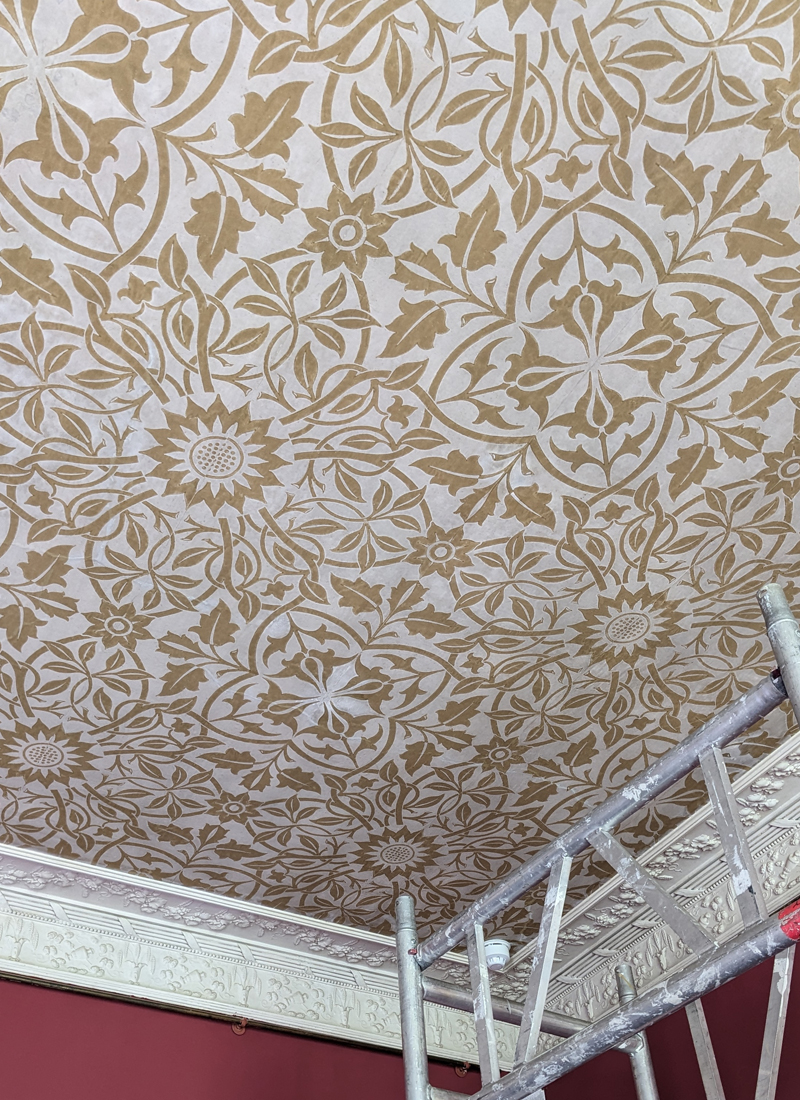
Newark Park, National Trust
William Morris Sunflower wallpaper
Case study
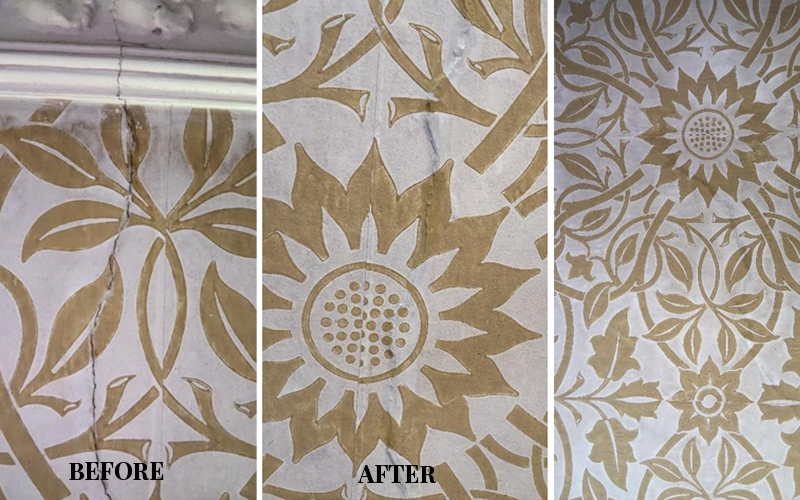
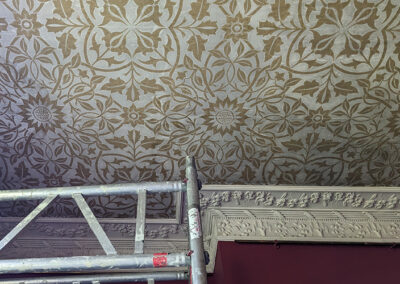
The William Morris ‘Sunflower’ wallpaper originally installed at St James’s Palace survives today as a remaining in‑situ example at Newark Park. The fragment retains its characteristic Morris repeat and hand‑crafted aesthetic, offering valuable evidence of the design’s historic use within royal interiors and its later relocation or reuse within the Newark Park setting.
Process
Design identyfication
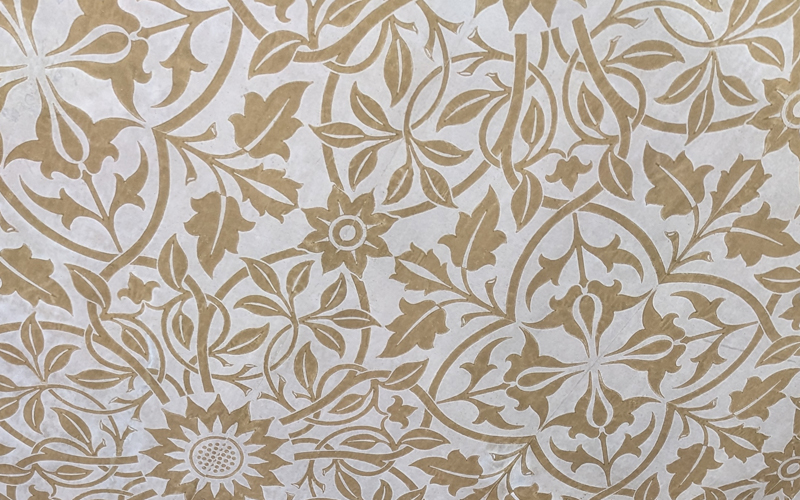
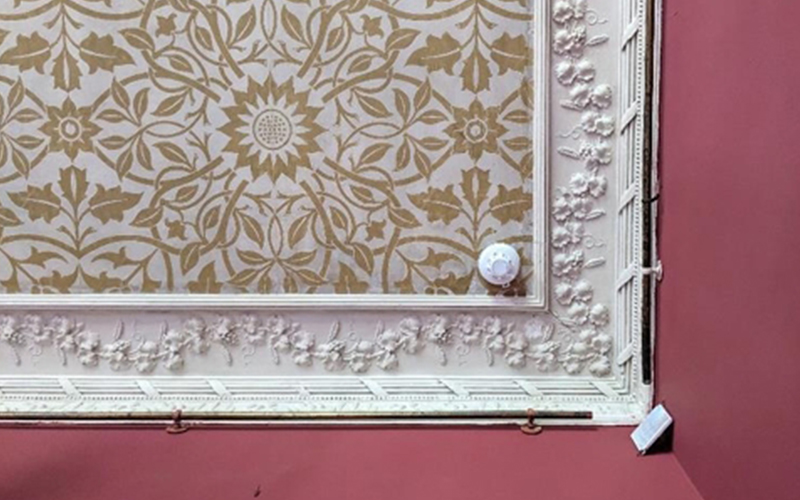
The Sunflower design, a late 19th‑century block‑printed wallpaper in distemper colours, was documented with its repeat measuring L 1070 mm × W 540 mm. Only half of the Sunflower motif appeared on the right side of each panel. The repeat followed a 180‑degree rotation and drop pattern, with each panel installed in alternating orientation to maintain the original layout.
Condition survey
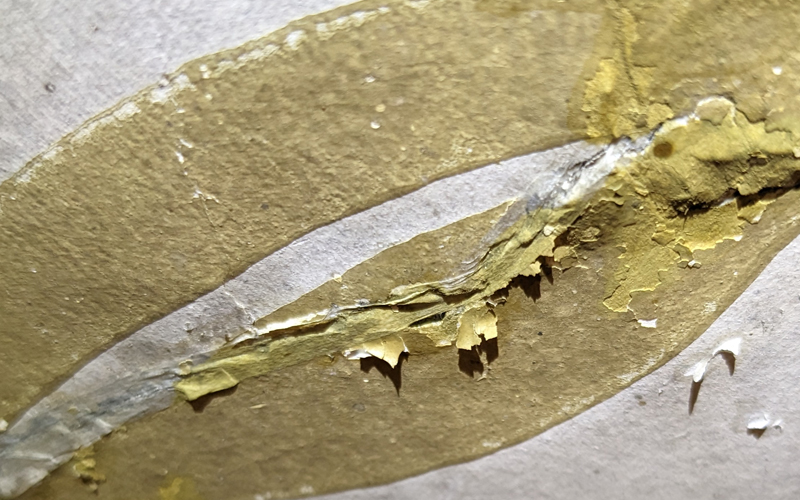
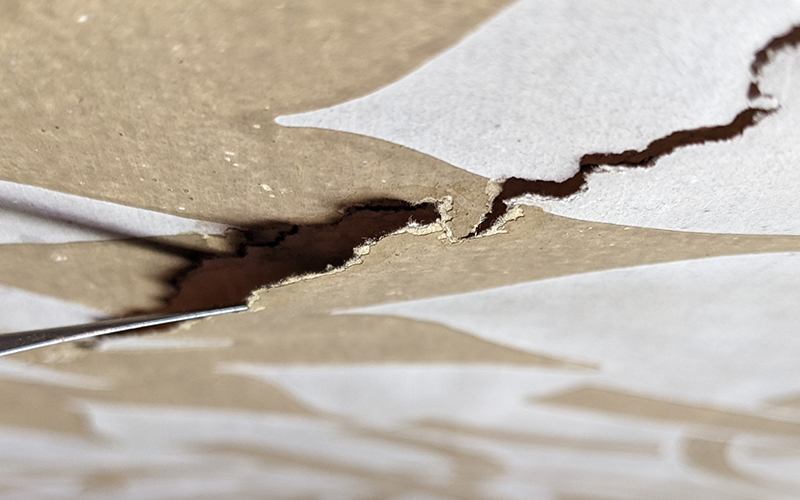
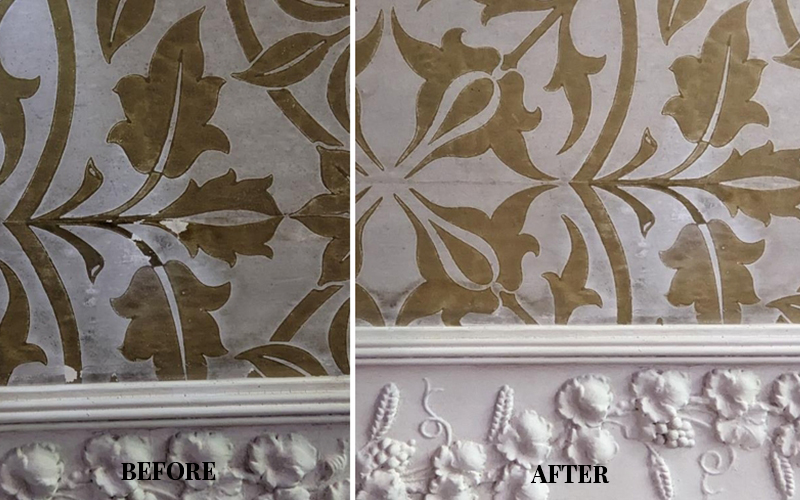
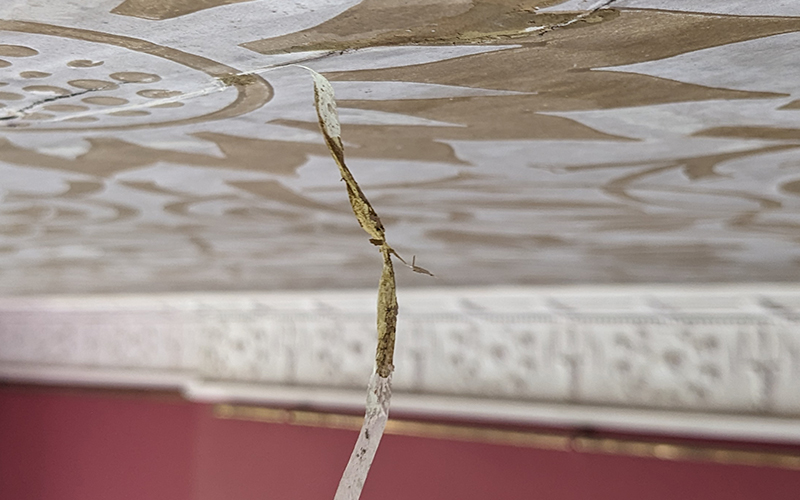
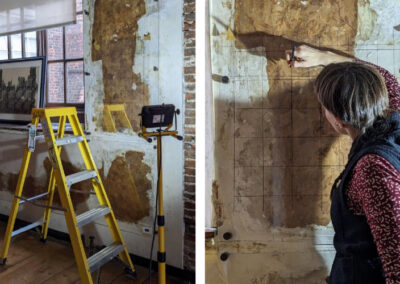
Close examination carried out in situ revealed extensive cracking to the plaster, which in turn affected the wallpaper. Flaking distemper pigment, areas of water‑related discolouration, and smoke‑induced pigment change were noted throughout. Existing Japanese tissue repairs had begun to lift and had discoloured, several large sections of wallpaper detached and required re‑adhesion.
Conservation treatment
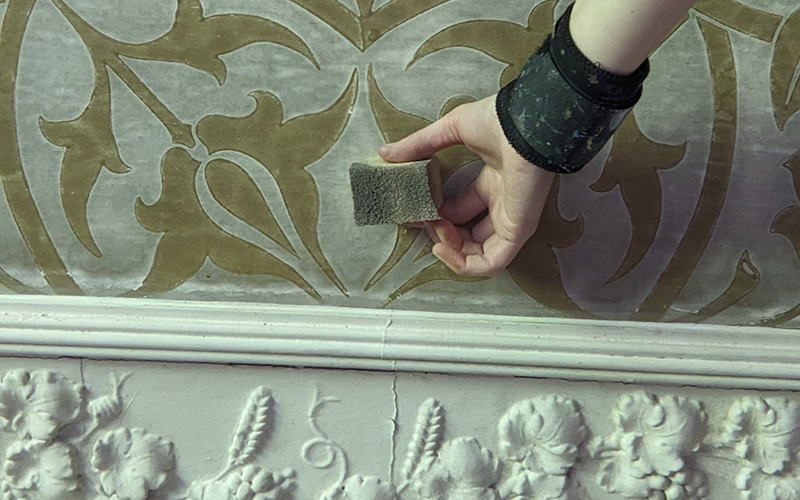
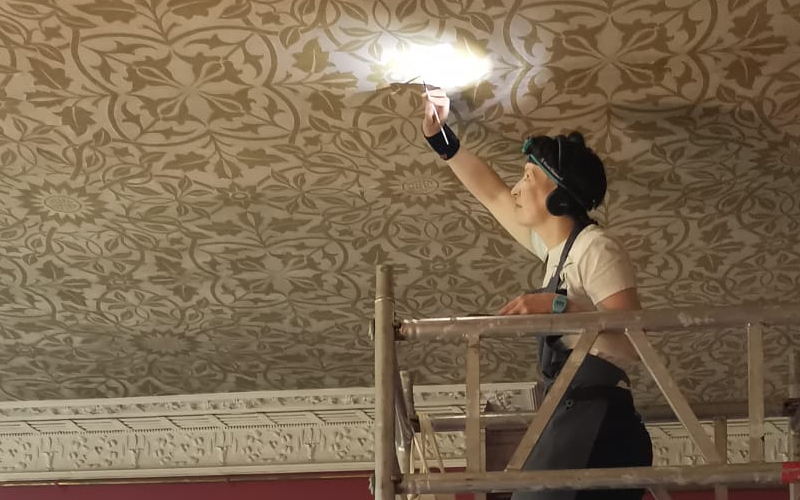
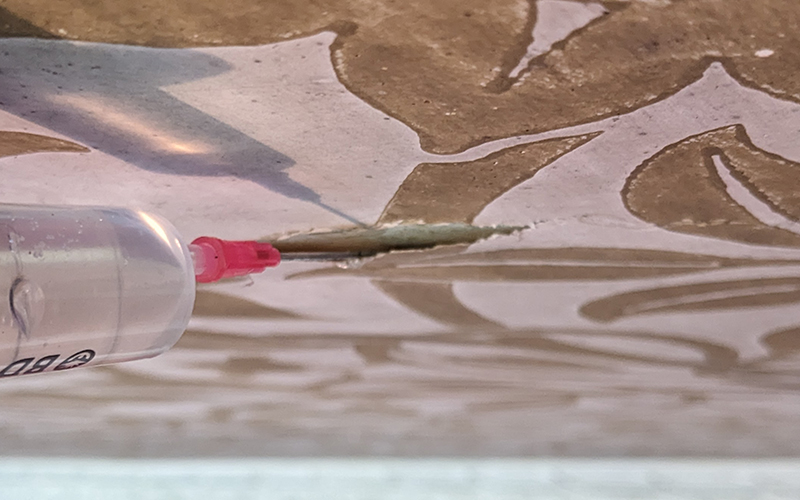
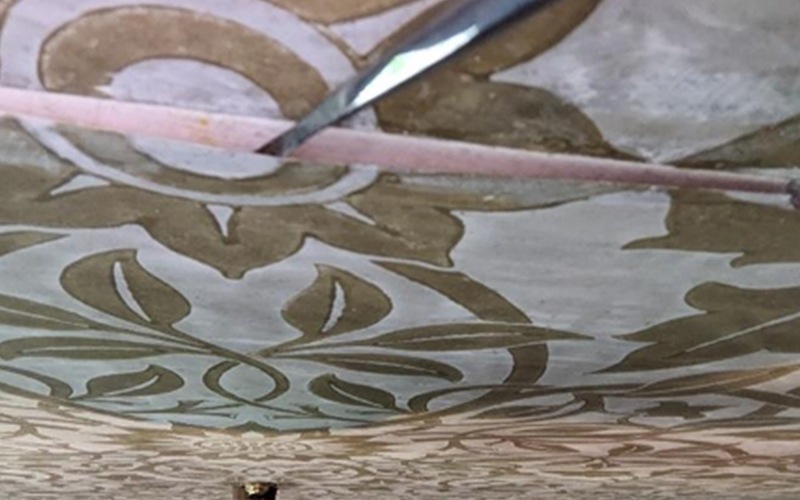
Surface cleaning was carried out using smoke sponges and a soft brush to lift dust, and loose matter from the wallpaper. Cracks affecting both the plaster and the paper were repaired with an appropriate Japanese tissue, adhered using a dilute solution of SCMC. Pigment consolidation was undertaken across larger unstable areas, using SCMC solution applied with a hypodermic syringe or a fine brush to secure friable distemper without altering the surface appearance. Small areas of pigment loss were toned with body colour pigments.
Gallery

Contact
justyna@justynamedon.uk