Tabula Stritta Conservation
Conservation of Tabula Stritta
Case study
Object description and historic context.
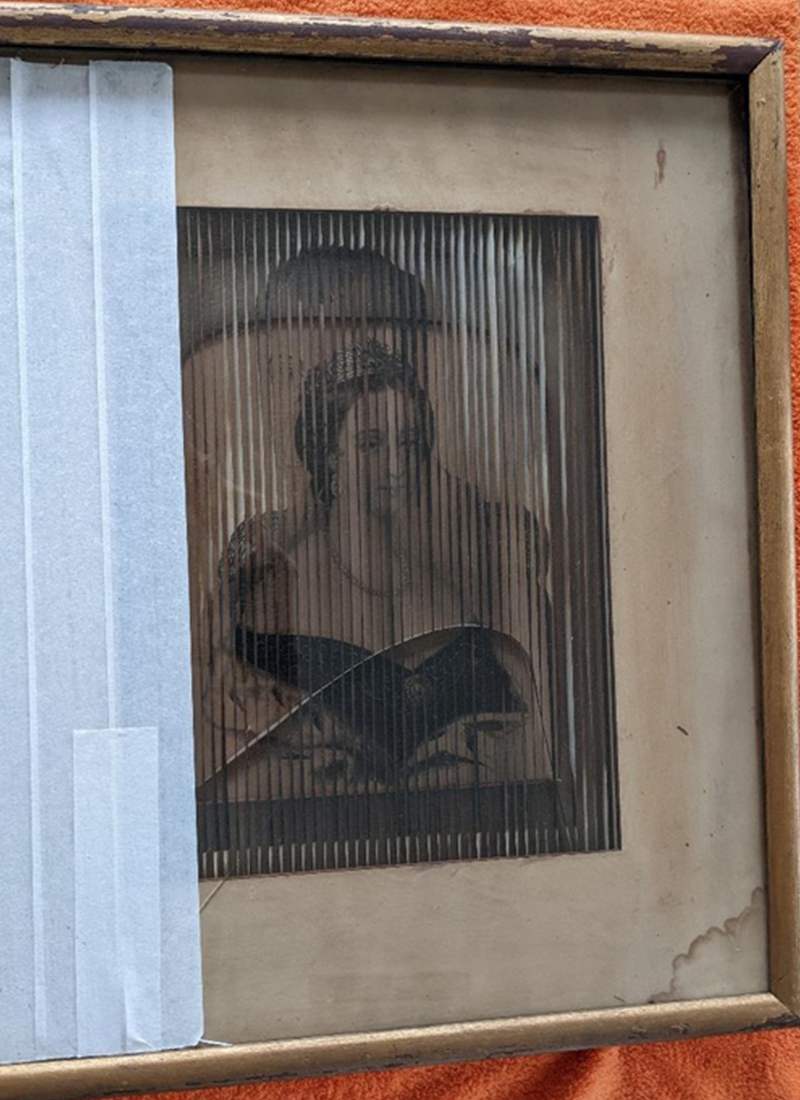
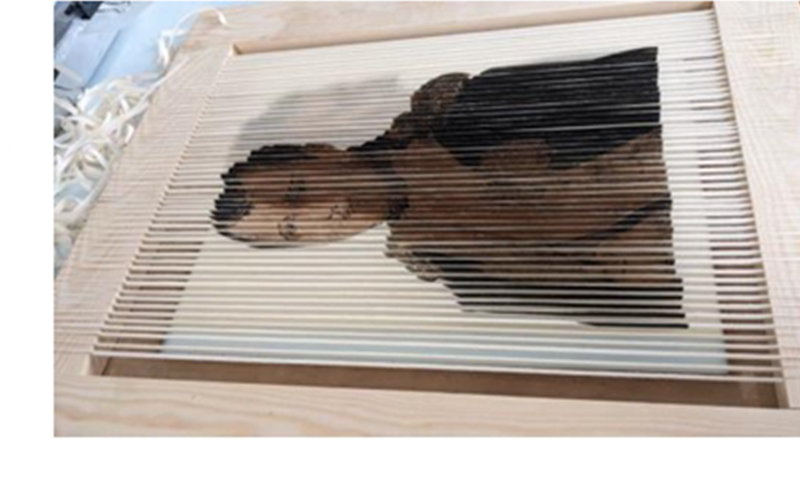
Tabula scalata consists of two images of the same scale that create a simple type of morphing effect, a variation known as Tri-scenorama or Tabula Stritta has three images.
Term Tabula Scalata was introduced in 1646 meaning ladder picture by Athanasius Kircher, in England they existed under the name of Perspective Pictures, Anamorphic pictures and turning pictures. In the 16th century Tabula Scalata was popular novelty in England. References can be found in the works of Shakespeare and other literature of the time.
Tri-scenoramas were common at the end of the 19th century as souvenirs for tourists.
Process
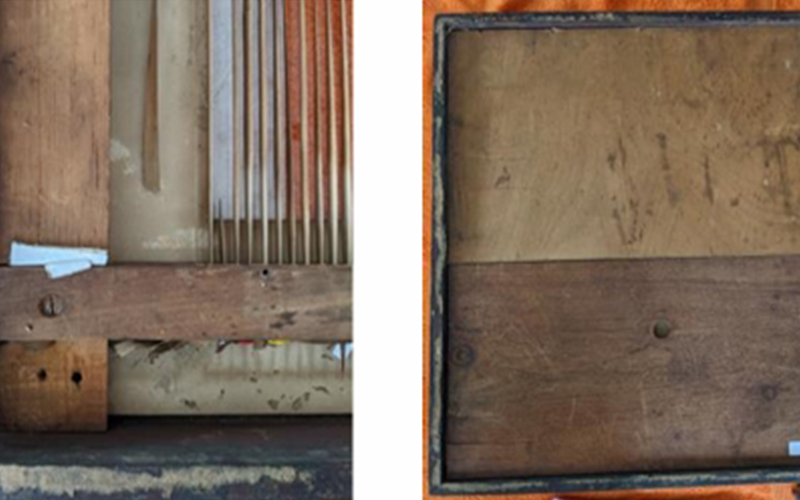
Condition survey of the housing
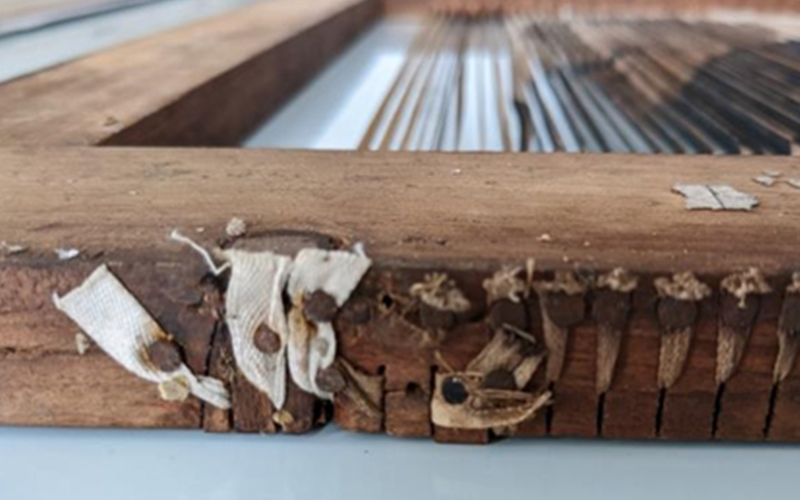
There is an evidence that wooden frame has been re-adjusted, signs of previous interventions were visible. Extensive damage to the wood at the top of the frame is registered, wood at the top has been shortened, possibly due to the broken tapes which were shortened and refitted as their condition deteriorated.
Acidity of wood has affected cotton tapes at the area of fitting it securely to the frame.
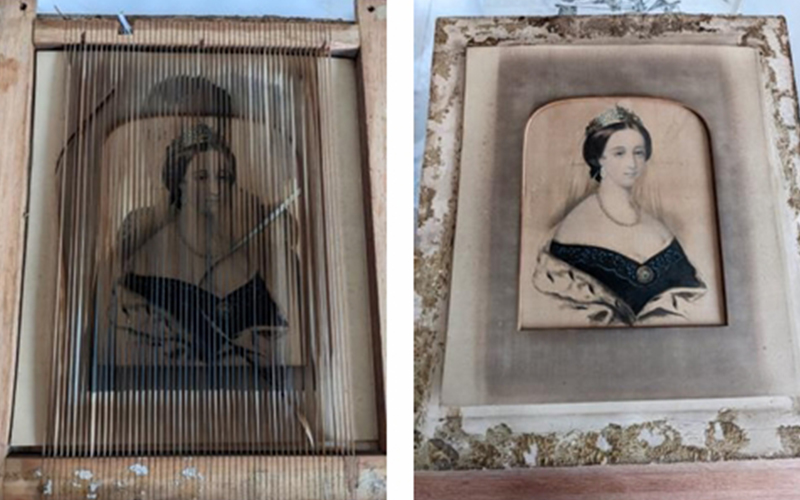
Condition survey of prints
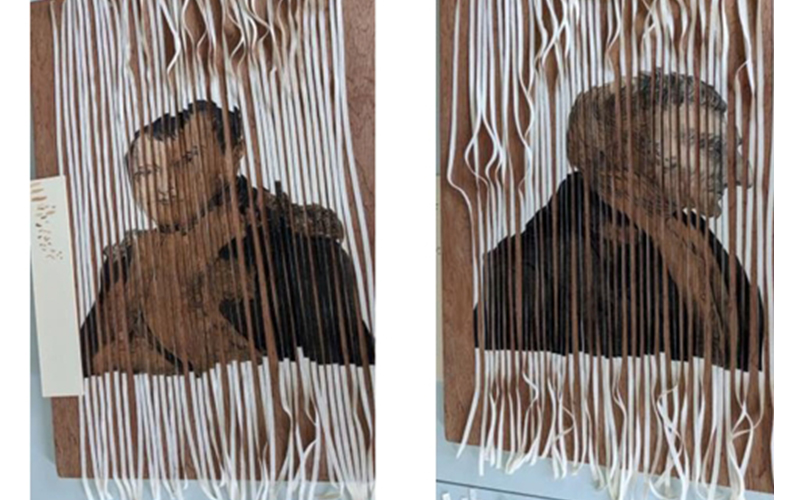
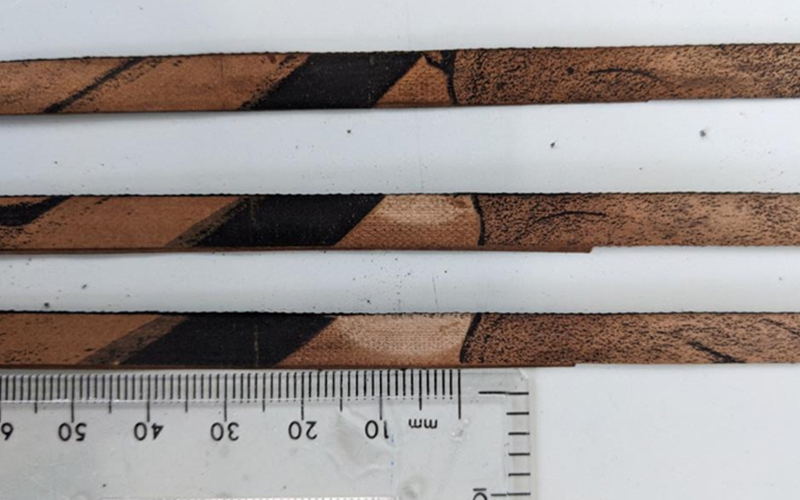
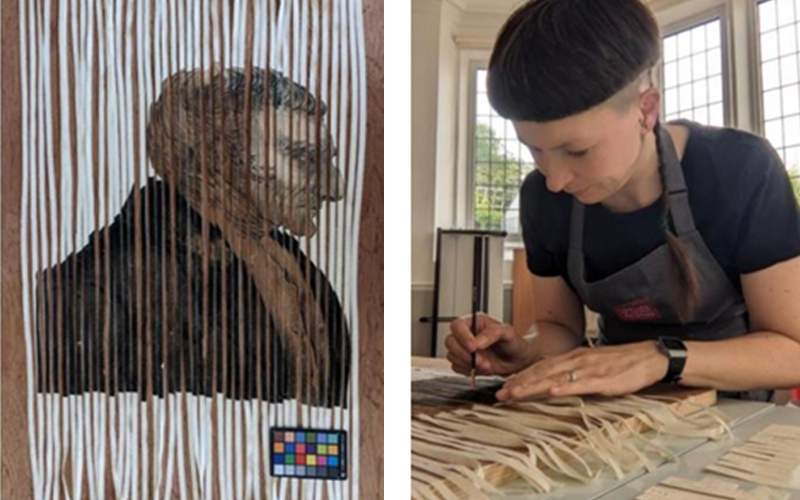
Due to complexity of the initial prints Installation each tape holding fragments of two prints; Duke of Wellington & Napoleon Bonaparte
was recorded, each print was housed on to 54 cotton tapes measuring 5mm x 550mm.
Noticeable colour changes of the cotton tapes suggest that the paste/adhesive used to attach prints created a barrier that preserved cotton deterioration in some areas.
Cotton tape has preserved its original colour in the area where prints were not placed.
Conservation treatment
At the bottom of the frame tapes were secured to wood using nails dating back to the time
of when frame was made- late XIX century.
At the top of the frame modern refitting and adjustment to both frame and fitting is being
recorded, instead of nails we can see colourful pins, suggesting that recent intervention took place in the late XX century, original wood from the top part of the frame was shortened and new fittings installed.
Treatment phase 1
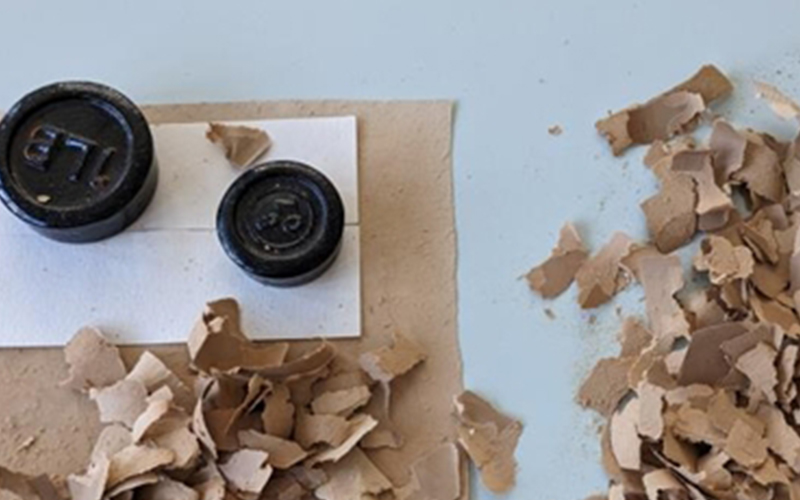
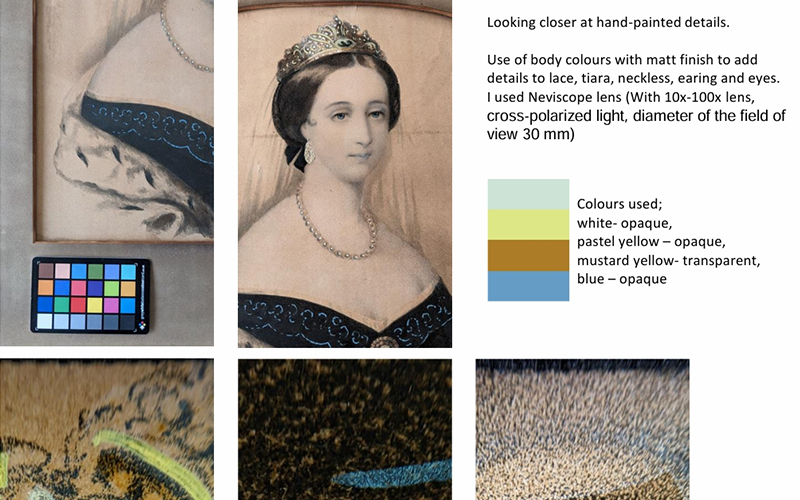
The acidic mount board was lifted using a spatula, and surface cleaning was carried out. Solubility tests were performed on the medium, and the stability of the paint layer was confirmed. The back board was then removed, and successive layers of paper were taken away using a scalpel and spatula.
The primary backing paper was removed with cotton swabs and water, allowing controlled softening of the adhesive. Methylcellulose was also applied in two areas to accelerate the process where necessary.
Treatment phase 2
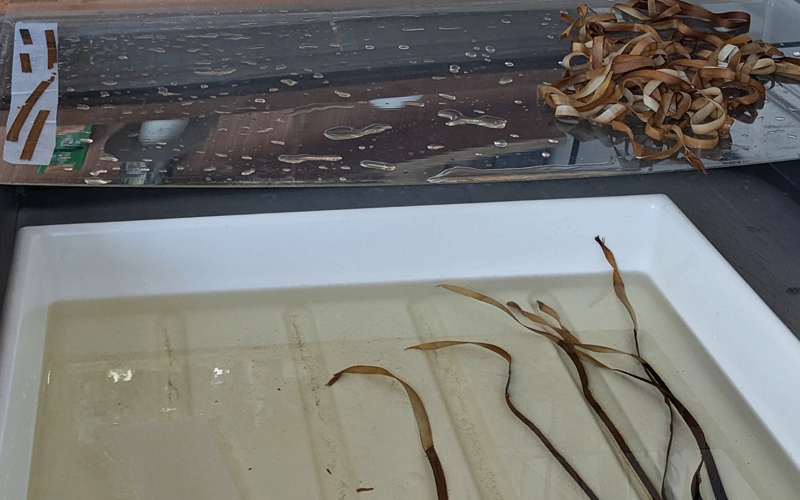
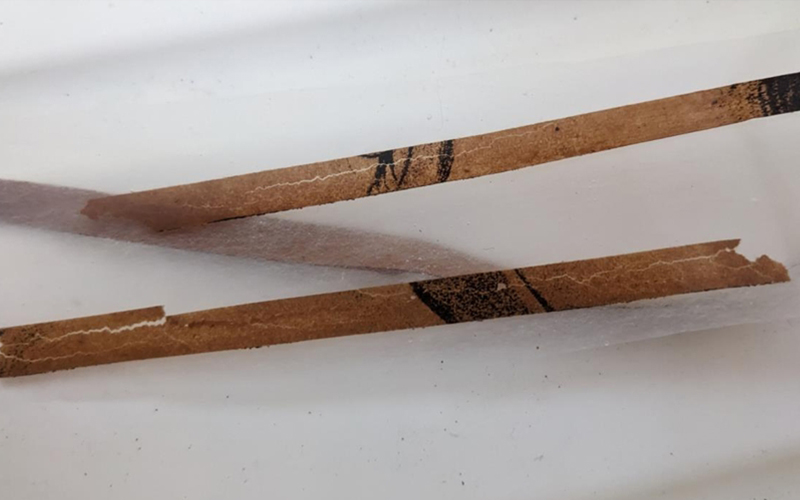
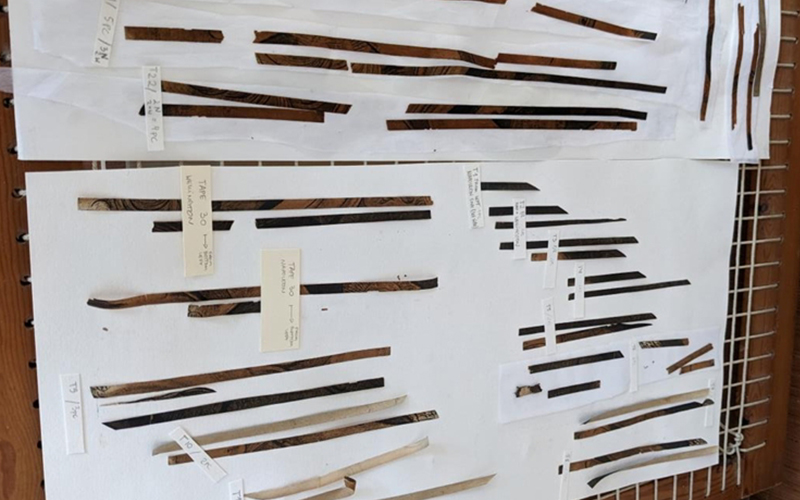
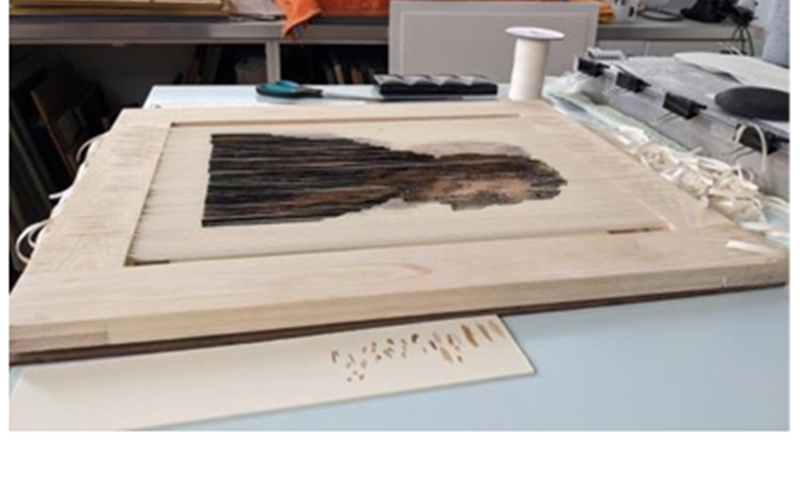
Tapes holding 5mm fragments of both prints are being removed from the wooden frame.
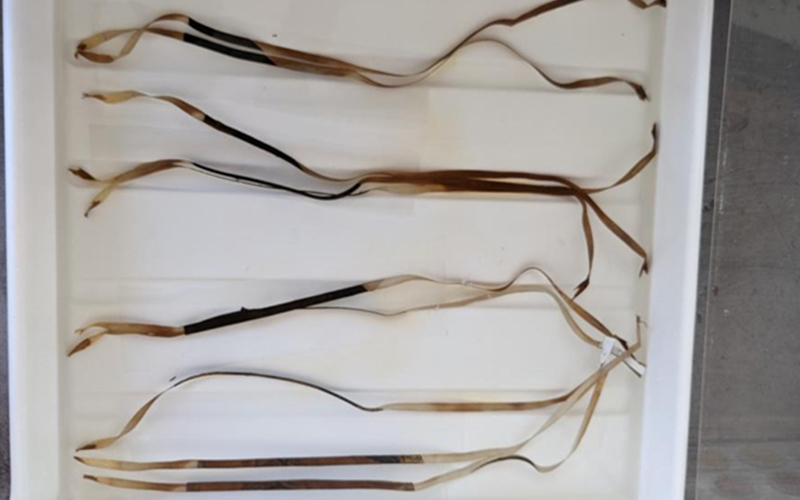
Paper condition very poor, extensive yellowing due to acidity and exposure to light and possibly smoke. After removing cotton tapes from the frame prints are being surface cleaned with smoke sponges and soft brush. Cotton tapes holding the prints were breaking when removed
from the frame.
Treatment
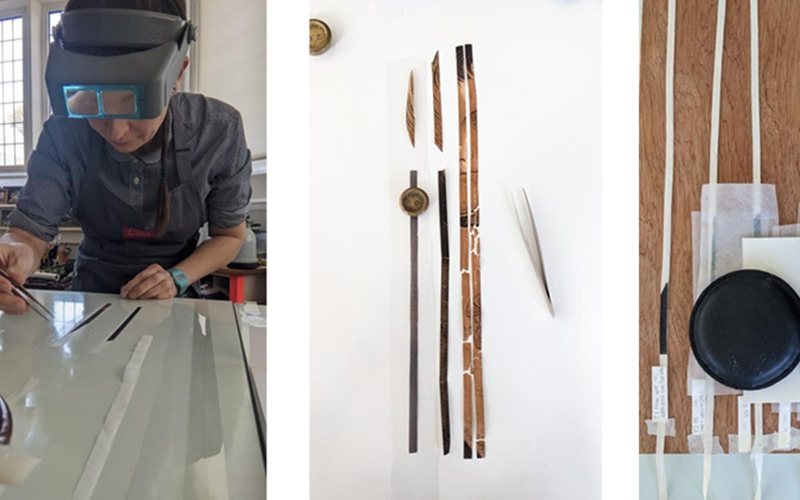
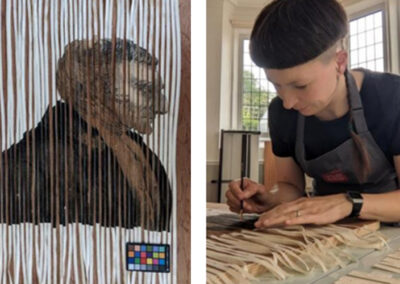
Paper fragments are brittle, precision tweezers had to be used and cut to size polyester sheet
was used for lifting the paper and placing over on to pasted with wheat starch paste
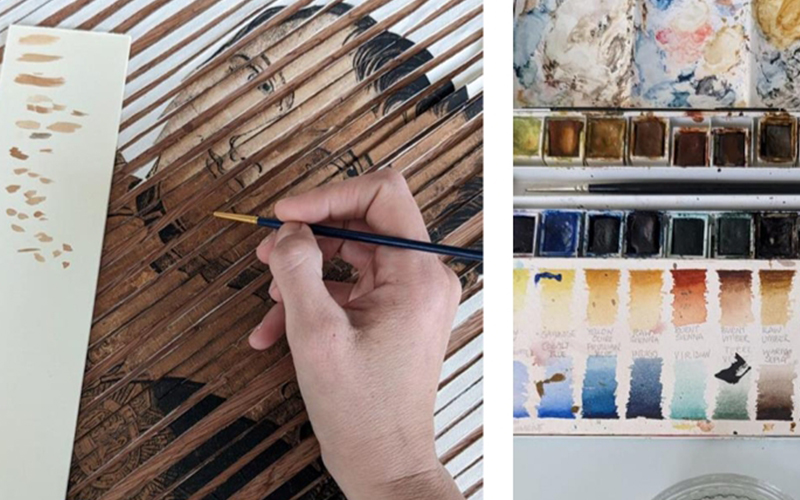
replacement cotton tapes. After prints were lined with Japanese tissue there were adhered to slightly stretched cotton tapes and flattened for 5 minutes, cotton tapes had to be numbered and stretched in the correct order.
Treatment phase 3
After washing of individual 5mm print fragments and removing them from cotton tapes, gentle cleaning of the adhesive residue took place.
Print fragments were lined with Japanese tissue before they were adhered to new
unbleached cotton tapes.
Treatment
After washing of individual 5mm print fragments and removing them from cotton tapes, gentle cleaning of the adhesive residue took place.
Print fragments were lined with Japanese tissue before they were adhered to new
unbleached cotton tapes.
Gallery
Contact
justyna@justynamedon.uk